
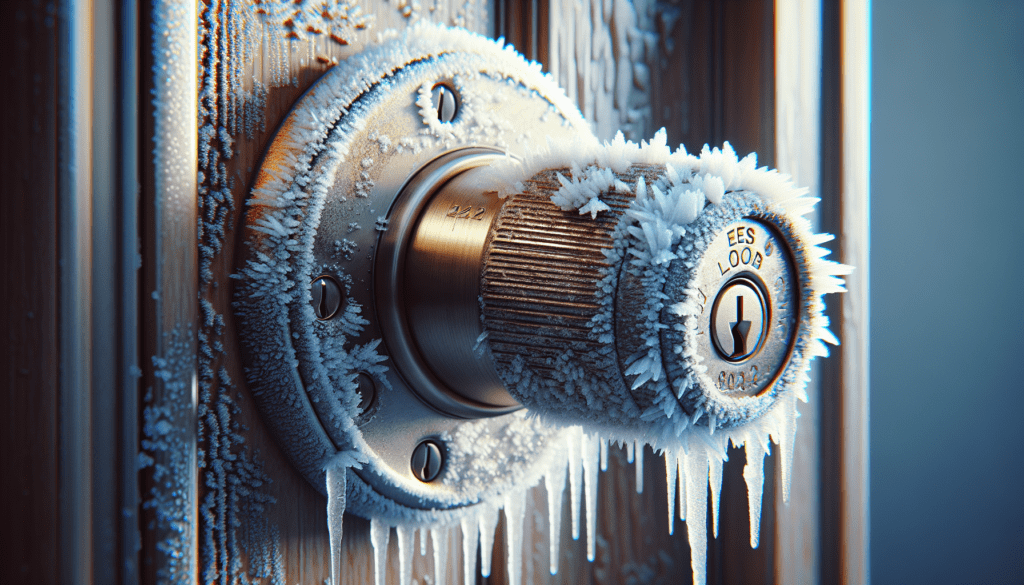
Have you ever rushed out in the morning only to find your front door stubbornly refusing to open because the lock is frozen or the latch is sticking?
Why locks freeze and doors stick in winter
Winters introduce conditions that make previously smooth door operation suddenly problematic. When temperatures drop, you’re up against ice, condensation, metal contraction, and swollen wood. Understanding the root causes makes it easier for you to pick the right fix rather than guessing and risking damage.
Cold weather creates several failure points:
- Moisture that gets into keyways or mechanisms can freeze into solid ice and prevent the cylinder or bolt from moving.
- Metal components contract slightly in cold weather, which can change tolerances and make moving parts tighter.
- Wooden doors and frames absorb moisture and can swell, rubbing against jambs and causing sticking that looks like a lock problem but is actually alignment.
- Dirt, grime, and old lubricants get thicker in the cold, increasing friction and preventing smooth operation.
When you recognize which factor is causing the trouble, you can apply targeted remedies that are safer and more effective than brute force.
How moisture causes freezing
If water or condensation reaches the cylinder or latch, it can freeze when temperatures fall below 32°F (0°C). Even tiny droplets inside the keyway can form a plug. You’ll often see a frozen lock when the key won’t fully insert or when the cylinder turns only a little before stopping.
How cold affects metal and lubricants
Cold makes metal parts contract slightly, tightening clearances. Meanwhile, many lubricants become viscous or tar-like in low temperatures, increasing resistance in moving parts. That combination can transform a normally-smooth lock into one that’s reluctant to move.
How door materials and alignment play a role
Doors that rub or bind are frequently a result of swelling wood or shifting framing. You might think the lock is the issue, but when you push or pull harder, the latch may still bind against a misaligned strike plate. Identifying whether the problem is mechanical (the lock) or structural (the door/frame) is key to saving time and preventing damage.
How wear, dirt, and corrosion contribute
Locks that haven’t been serviced accumulate dust, grit, and dried lubricants, which increase friction. Corrosion from salty air or pollutants can seize components too. Regular maintenance keeps this in check.
Identifying whether the lock or the door is the problem
Before you start trying fixes, take a few diagnostic steps so you don’t waste time or make the problem worse.
Steps to diagnose:
- Try the key gently. If the key won’t fully insert or turns only a fraction, you likely have ice in the cylinder or a broken key.
- Try turning the knob or thumbturn. If the cylinder turns freely but the door still won’t open, the latch/strike alignment could be the issue.
- Push or pull the door while turning the key. If the lock works while the door is moved slightly, alignment is the main culprit.
- Look for visible ice around the keyway, on the bolt, or around the jamb. If you see ice, treat for freezing first.
- Wiggle the key lightly. A stuck key might indicate internal obstruction or a broken key starting to shear.
If the key is broken, the lock is visibly damaged, or you can’t safely remove ice with household tools, call a pro instead of forcing the issue.
Immediate fixes for a frozen lock
When you discover a frozen keyway or cylinder, speed and care matter. Forcing a key can snap it, and adding the wrong product can gum up the lock permanently. Use these safe, practical methods first.
Tools and materials you may need (quick reference table):
| Item | Purpose |
|---|---|
| Lock de-icer spray (commercial) | Fast melting and lubrication specifically formulated for keyways |
| Rubbing alcohol or hand sanitizer (alcohol-based) | Displaces water and lowers freezing point |
| Hair dryer or heat gun (low setting) | Provide adjustable heat to thaw ice; keep at safe distance |
| Warm (not boiling) water in a bottle | On-metal heating carefully applied — use sparingly |
| Graphite powder | Dry lubricant for keyways after thawing |
| Teflon/silicone spray (lock-safe) | Lubrication that resists dirt buildup; use sparingly on latch |
| Rubber gloves | Protect hands in cold and when using heat |
| Lighter (use with caution) | Heating key quickly — risky and not recommended in enclosed spaces |
Use a commercial lock de-icer first
Lock de-icer sprays are made to melt ice and lubricate the mechanism quickly. They often contain alcohol or glycol and are safe for lubricating pins and springs. Spray a small amount into the keyway, wait 10–20 seconds, and try the key gently.
Why it’s a good choice:
- Formulated for locks, they’re less likely to damage internal components.
- Provide both de-icing and lubrication.
Alcohol-based solutions (hand sanitizer/rubbing alcohol)
If you don’t have a commercial de-icer, alcohol-based hand sanitizer or 70%+ isopropyl rubbing alcohol is a good substitute. Alcohol lowers the freezing point and helps melt the ice. Apply a small amount to the key first or use a dropper to add a bit into the keyhole. Insert the key gently and work it back and forth until the cylinder frees.
Caution:
- Don’t pour excessive liquid into the lock; use small amounts.
- Alcohol evaporates quickly and leaves less residue than water.
Apply heat carefully
A hair dryer on a low to medium setting can be directed at the lock to warm the metal and melt ice. Keep the dryer moving and don’t concentrate heat on one spot for too long. Avoid using high heat sources (soldering irons, open flames) near paint or varnish and never heat the key or cylinder with a direct flame in confined spaces.
Heat the cylinder for a minute or two and then test the key. If the cylinder warms but still resists, use a de-icer or lubricant to ensure internal components move freely.
Heat the key (use extreme caution)
If you choose to warm the key, heat it quickly with a lighter and then insert it. The warm metal can melt ice in the keyway. However, this carries risks:
- You can burn your fingers.
- Heated keys can damage plastic-coated keys or paint.
- Heating may harm internal lubricants.
If you try this, use pliers or a cloth to hold the key, keep the flame brief, and avoid open indoor flames.
Avoid pouring boiling water
People sometimes pour hot water on a frozen lock, but that can refreeze into more ice when temperatures remain below freezing and can force water deeper into the mechanism or surrounding wood. If you use warm water, do so sparingly and dry the area thoroughly afterward. Prefer alcohol or de-icers to reduce the refreeze risk.
After thawing: lubricate correctly
Once the lock is thawed and working, lubricate it with a dry graphite powder or a Teflon/silicone spray designed for locks. Graphite is excellent for keyways because it won’t attract dirt and grime like oil-based lubricants. If you use a wet lubricant (some lock sprays contain PTFE/Teflon), apply a small amount and then operate the lock several times.
Method comparison table:
| Method | How it works | Pros | Cons |
|---|---|---|---|
| Commercial lock de-icer | Melts ice and lubricates | Fast, lock-safe | Requires purchase |
| Alcohol/hand sanitizer | Displaces water, lowers freezing point | Readily available, quick | Evaporates fast — may need reapplication |
| Hair dryer/heat | Warms lock to melt ice | Effective, controlled heat | Requires power; time-consuming |
| Heated key | Directly melts ice in keyway | Quick when done correctly | Burn risk, can damage key/lock |
| Warm water | Adds heat to melt ice | Simple | Risk of refreeze, water ingress |
| Graphite powder (post-thaw) | Lubricates without attracting dirt | Long-term, lock-friendly | Messy if overapplied |
| Oil-based lubricants (e.g., WD-40) | Temporarily lubricates | Readily available | Attracts dirt; not recommended as long-term lock lubricant |
Fixing a sticking door or lock (non-frozen)
If the lock itself is fine but the door is binding, you’ll need to focus on alignment and hardware. These problems are common with older doors or after weather changes.
Tighten and inspect hinges
Loose hinge screws allow the door to sag, causing the latch to miss the strike plate. Check hinge screws and tighten them with a screwdriver. If a screw won’t tighten because the hole has enlarged, replace it with a longer screw that reaches the framing for better grip.
Steps:
- Open the door and inspect all hinge screws.
- Tighten screws; if they strip, remove them and replace with longer wood screws.
- If hinges are bent or worn, replace them.
Adjust or replace the strike plate
If the latch hits the edge of the strike plate or you see wear marks, the strike plate may be misaligned. You can:
- Loosen the strike plate screws and shift its position slightly, then retighten.
- Enlarge the strike recess in the jamb with a chisel for smoother travel.
- Replace the strike plate if it’s warped or damaged.
Plane or sand the door edge
When the door rubs against the jamb because of swelling, you can shave down the high spot. Steps:
- Mark the area where the door rubs when you close it.
- Remove the door from hinges if necessary and use a hand plane or sanding block to remove small amounts of wood.
- Re-hang the door and check fit; repeat sparingly until it closes smoothly. Note: If you’re uncomfortable removing a door, call a pro.
Replace or lubricate the latch and bolt
If the latch sticks in the strike, spray the latch face with a Teflon-based lubricant and operate the latch several times. If the bolt is damaged or worn, replace the latch mechanism.
Inspect the threshold and weatherstripping
Old weatherstripping can push a door out of alignment or cause binding. Replace compressed weatherstripping and adjust the threshold if it’s too high.
Preventive maintenance to avoid winter problems
Preventing locked-out mornings starts before the freeze. Seasonal maintenance prevents most winter lock and door issues.
Winter maintenance checklist:
- Apply graphite powder to keyways once a season, and use a PTFE/silicone lock spray on latches.
- Inspect and tighten hinge screws; use longer screws into the frame where necessary.
- Check strike plate alignment and adjust before extreme cold arrives.
- Replace worn weatherstripping and door sweeps to keep moisture out of the jamb.
- Seal gaps around the frame to reduce condensation and moisture getting into the lock.
- Consider installing insulated door thresholds or storm doors to reduce exposure.
- For businesses, schedule a professional inspection of exit devices and panic hardware.
Small investments in prevention pay off by reducing emergency calls and avoiding damage from forcing stuck locks.
Tools and supplies you’ll want on hand
Keep a small winter kit ready so you can act fast when a lock starts misbehaving.
Suggested kit:
- Commercial lock de-icer
- 70% isopropyl alcohol or alcohol-based hand sanitizer
- Graphite powder and a small brush or applicator
- Small can of lock-safe PTFE/silicone spray
- Hair dryer (kept indoors)
- Basic screwdriver set
- Flashlight and gloves
Commercial properties: special winter considerations
If you manage a business or commercial property, winter lock issues can mean missed work hours, frustrated clients, and safety risks. Commercial doors also have different hardware and higher use rates, so maintenance matters more.
Common commercial services that help in winter:
- Rekeying to control access after winter staff changes
- Installing bump-proof and high-security locks to prevent tampering during seasonal slowdowns
- Lockout services and 24-hour emergency access for urgent situations
- Master key systems for streamlined access control across multiple doors
- Fire-rated panic bar installation to ensure safe exits even when components stiffen from cold
- IC core and high-security hardware appropriate for high-traffic commercial doors
- Door hardware installation, changes, or repairs to correct alignment or replace worn parts
- Safe installation and maintenance to protect valuables in harsh weather
Table — commercial locksmith services and winter benefits:
| Service | Why it matters in winter |
|---|---|
| Rekeying | Limits access after staff changes; prevents unauthorized entry during closures |
| Bump-proof/high-security locks | Reduce vulnerability when doors are more often frozen and physically manipulated |
| Lockout services | Fast response to avoid lost business hours from frozen or stuck locks |
| Master key systems | Easier access control and fewer keys to manage when staff rotate |
| Panic bar installation | Ensures emergency exits function smoothly despite cold-related stiffening |
| IC Core/door hardware | Robust hardware mitigates weather-related wear and misalignment |
| Safe installation | Keeps valuables secure and accessible even when building doors bind |
If you run a business in Las Vegas, you’ll appreciate that winter conditions still occur — and that locks in busy facilities need professional attention before emergency situations arise.
Why choose a professional locksmith and when to call one
There are times when DIY methods are appropriate, and times when calling a locksmith is the safest and most efficient option.
When to call a locksmith:
- A key is broken inside the cylinder.
- The lock won’t respond to de-icing methods or you can’t remove the frozen key.
- You’ve tried basic troubleshooting and the latch is still misaligned or the door is significantly sagging.
- There’s visible damage, rust, or seized internal parts.
- You need a secure, long-term upgrade for a commercial property.
- It’s an emergency outside normal hours and you can’t access the building.
What a locksmith can do for you:
- Remove broken keys safely and replace or repair the cylinder.
- Rekey or replace locks with high-security or bump-proof options.
- Adjust or replace heavy-duty commercial hardware like panic bars and IC cores.
- Provide 24-hour emergency lockout service — useful for both homes and businesses.
- Advise on preventive upgrades and perform professional maintenance.
If you’re in or near Las Vegas, Silver Eagle Locksmith offers 24-hour services and a full suite of commercial solutions. They’re family-owned, licensed, bonded, and insured, with technicians certified by the Metro Police Department — helpful if you need a reliable, local pro during winter lock emergencies.
Safe practices and what not to do
It’s tempting to use brute force or improvised tools when you’re late, but certain actions can make the problem worse.
Avoid:
- Forcing a key if it doesn’t fully insert or turn — the key can shear off, leaving you with a broken key and more expense.
- Using oil-based household lubricants as a long-term solution — they attract dirt, which increases friction over time.
- Pouring boiling water on a lock in freezing conditions — it can refreeze and force water deeper into the mechanism or warp wooden parts.
- Using open flames or high heat in confined spaces — risk of burns or fire.
- Attempting to manipulate commercial panic hardware or fire-rated doors without proper expertise — this can create safety code violations.
Instead, use lock-safe de-icers, dry lubricants like graphite, or consult a professional if the fix is beyond a quick thaw and lube.
Cost considerations for common winter lock services
Knowing rough costs helps you decide whether to try a DIY fix or call a pro. Prices vary by region, hardware, and whether it’s an emergency callout.
Typical ranges (estimates):
- Lock de-icer or graphite powder: $5–$20
- Locksmith visit for thawing and simple repair: $75–$150 (non-emergency daytime)
- Emergency lockout service (after hours): $100–$250
- Rekeying one lock: $30–$100 per lock (depends on lock type)
- Lock replacement (residential): $60–$250 per lock, depending on quality
- Commercial hardware repair or panic bar service: $150–$600+, depending on scope
If your property requires reliable, fast response — especially commercial properties in Las Vegas — having a 24-hour locksmith on speed dial can save time and money.
Winter preparedness checklist for your doors and locks
Make a simple plan to reduce winter lock problems before the cold hits.
Seasonal checklist:
- Apply graphite to keyways and a PTFE spray to latches.
- Tighten hinge screws and replace stripped screws with longer ones.
- Inspect and replace weatherstripping where compressed or cracked.
- Test doors and locks monthly and address minor sticking immediately.
- Keep a small winter kit (de-icer, graphite, hair dryer, screwdriver) handy.
- If you manage multiple doors, arrange a professional inspection before heavy use seasons.
- Note locksmith contact information, especially a 24-hour provider.
Quick troubleshooting tips you can do right now
- If the key won’t insert: check for ice and use a de-icer spray or alcohol.
- If the key inserts but won’t turn: try lubricating the key with graphite then insert and work gently.
- If the door won’t latch: push/pull the door slightly while turning the handle to see if alignment is the issue.
- If the key starts to shear: stop immediately and call a locksmith to extract the broken piece.
- If you’re locked out in freezing weather: keep yourself warm and call a professional — don’t try to force a window or door and risk injury or damage.
Why Silver Eagle Locksmith is an option to consider in Las Vegas
If you’re in the Las Vegas area and want a team that knows local conditions and commercial needs, consider Silver Eagle Locksmith. They’re family-owned, have over a decade of experience, and are licensed, bonded, and insured. Their technicians are certified by the Metro Police Department, which gives you confidence when you need emergency service.
Services they offer that help during winter:
- 24-hour lockout response to get you back into your home, office, or vehicle
- Rekeying, master key systems, and high-security lock installations for commercial reliability
- Fire-rated panic bar installation and IC Core services for safety compliance
- Door hardware installation, changes, or repairs to fix alignment or worn parts
- Safe installation and maintenance to protect valuables regardless of door issues
If you need immediate help or want to arrange preventative maintenance, you can contact Silver Eagle Locksmith at 702-539-9581.
Final notes and a quick recap
Winter door problems—frozen cylinders, sticky latches, and swollen doors—are common, but most are preventable and fixable. Start by diagnosing whether the lock or the door is the real issue. Use lock-safe de-icers, alcohol, or controlled heat to thaw frozen locks, and choose dry lubricants like graphite for long-term smooth operation. Address stickiness caused by alignment or swelling with hinge and strike adjustments, and plane or sand the door only if necessary. For commercial settings, make sure your hardware is rated and maintained to avoid downtime.
If you face broken keys, seized cylinders, or complex commercial hardware issues, calling a licensed locksmith is the safest option. For Las Vegas businesses and residents, Silver Eagle Locksmith offers round-the-clock response, comprehensive commercial services, and experienced licensed technicians to help keep your doors secure and operational throughout the winter months.
If you want, you can ask for a short, seasonal checklist tailored to your specific type of door (wood, metal, aluminum storefront) and I’ll put one together with exact steps you can follow before the next freeze.
